Monday, September 24, 2018


--------------When one of the richest, most powerful, or influential men in the world gives you advice, it would be stupid of you to ignore it. So when we prepare a list of the 10 books that Bill Gates thinks you should read, you’d better turn pages around like a stripper.

Obviously, when you finish reading, you will not start magically sticking bills out of your pockets. And yet, it is not bad to know the books that have contributed to forming one of the minds that in turn has helped define the world as we know it.And if what worried you is that I was recommending 10 computer manuals, quiet. Mr. Gates is not fond of them. However, he seems to be fascinated by the autobiographies of powerful men in the world of economy.-------------------------------------------------------
Bill Gates Readinglist Debuts, over 2000 Recommended /inspired book titles available .Format;PDF/ebook. Price;, FOC delivered into your email address, call +2348030485016 jeffnkwocha@gmail.com


The Gates Notes LLC
By LUCY FELDMAN
May 21, 2018
Bill Gates wants you to do some serious thinking this summer. For his annual list of the best books to read this season, Gates has selected five heavy hitters that pose big questions: “What makes a genius tick? Why do bad things happen to good people? Where does humanity come from, and where are we headed?”
But beach readers need not worry. In a post announcing his picks on Gates Notes, he adds: “All these books are fun to read, and most of them are pretty short.” Here, the five books Gates wants you to read this summer.

Leonardo da Vinci, by Walter Isaacson

Gates became the proud owner of one of Leonardo da Vinci’s surviving journals in the 1990s, and his fascination with the artist and inventor has lived on. “More than any other Leonardo book I’ve read, this one helps you see him as a complete human being and understand just how special he was,” Gates writes of Isaacson’s biography. “When you look across all of Leonardo’s many abilities and his few failings, the attribute that stands out above all else was his sense of wonder and curiosity.”

Everything Happens for a Reason: and Other Lies I’ve Loved, by Kate Bowler

The only memoir on his list this year, Gates selected Bowler’s story of battling stage IV colon cancer because it asks an essential question: Why? Bowler, a religious scholar, grapples with faith and fate as she lives through the trials of illness — and does so with a sense of humor, Gates writes. “It’s inspiring to see this thoughtful woman face such weighty topics with honesty and humor.”

Lincoln in the Bardo, by George Saunders

Saunders, a MacArthur genius grant recipient, earned a Man Booker Prize for his novel centered around the death of Abraham Lincoln’s son, Willie — the first novel for the writer of acclaimed short stories. “Saunders also uses excerpts from historical texts to tell the story of Willie’s death and its aftermath. I loved how he uses these flashbacks to show how fuzzy our recollections of the past can be,” Gates writes. “It reminded me of the musical Hamilton, which deals with similar ideas about how storytellers shape history.”

Origin Story: A Big History of Everything, by David Christian

“It’s human nature to be curious about where we come from,” Gates writes, “and origin stories unite people through a common history and shared sense of purpose.” Christian’s book draws its inspiration from his online class Big History — which Gates describes as his “favorite course of all time” — about the origin and evolution of life in our universe.

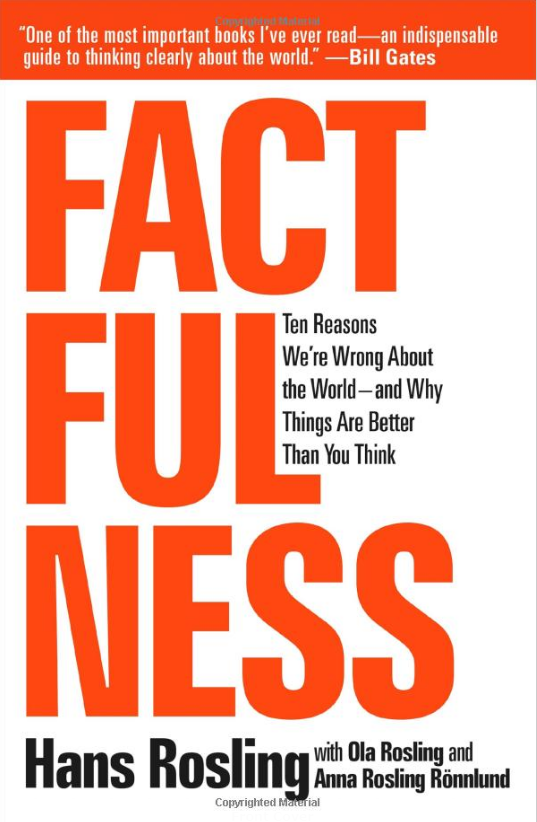
Factfulness: Ten Reasons We’re Wrong About the World-and Why Things Are Better Than You Think, by Hans Rosling

Swedish physician and statistician Hans Rosling developed an audience with his ideas about addressing global health. He died in 2017, but left behind Factfulness, co-written by his son and daughter-in-law and published in April. Rosling “gives you a breakthrough way of understanding basic truths about the world — how life is getting better, and where the world still needs to improve,” Gates writes. “It’s a fitting final word from a brilliant man, and one of the best books I’ve ever read.”

Bill Gates Readinglist Debuts, over 2000 Recommended /inspired book titles available .Format;PDF/ebook. Price;, FOC delivered into your email address, call +2348030485016 jeffnkwocha@gmail.com

Saturday, September 22, 2018

Top 10 Books That Bill Gates Believes Everyone Should Read


Top 10 Books That Bill Gates Believes Everyone Should ReadTop 10 Books That Bill Gates Believes Everyone Should Read
When one of the richest, most powerful, or influential men in the world gives you advice, it would be stupid of you to ignore it. So when we prepare a list of the 10 books that Bill Gates thinks you should read, you’d better turn pages around like a stripper.

Obviously, when you finish reading, you will not start magically sticking bills out of your pockets. And yet, it is not bad to know the books that have contributed to forming one of the minds that in turn has helped define the world as we know it.

And if what worried you is that I was recommending 10 computer manuals, quiet. Mr. Gates is not fond of them. However, he seems to be fascinated by the autobiographies of powerful men in the world of economy.
Warren Buffet, Alfred Sloan are some of the examples of personalities Bill Gates seems to be paying attention to. In addition, he is also fond of books dealing with the behavior of the human mind, society and the business world.
1. “My Years with General Motors”, By Alfred Sloan
Bill Gates defined it as “the best book you could read if you could only read a book about business”.
2. “Bussines Adventures, Twelve Classic Tales from the World of Wall Street”, By John Brooks
The second book recommended by Bill Gates is also well known in the business world.
3. “The Best Angels of Our Nature”, By Steven Pinker
This book recommended by Bill Gates has as a subtitle “Why Violence Has Been Denied”. The truth is that despite how dark the title may sound, the book is basically pretty optimistic. It has summarized how violence throughout history has been declining in all aspects of human life.
4. “Tap Dancing to Work: Warren Buffett on Practically Everything”, By Carol Loomis
Bill Gates recommends this book by saying: “I think anyone who reads it whole will have two possible reactions: First, Warren is incredibly consistent applying his vision and principles throughout his career, and secondly, this analysis to understand the world of business and markets have no comparison.”
5. “Where Good Ideas Come From”, By Steven Johnson
We must take into account the number of creatives that have influenced how we live our lives today. If it were not for a handful of people with clear ideas and concise goals, we would hardly have been able to get to where we are. However, we must bear in mind that these great ideas do not come from anything: the bosses, the thinking heads, have to know how to water the garden of good ideas.
6. “Life Is What You Make It”, By Peter Buffet
It is never easy to live in the shadow of a great man. So picture the picture that Peter Buffett had before him before starting his career. This book is a reflection on how you can live life as one decides to live it, and how the path that our predecessors mark us is just that, a path, an option that we can or can not take.
According to Bill Gates in this book: “Contrary to what people believe, Peter is not the heir to a great fortune of his father. Instead, he has been encouraged to go his own way. of that way, of the wisdom and the perceptions that developed along that trip”.
7. “The Language Instinct: How the Mind Creates Language”, By Steven Pinker
Curiously, this book does not deal directly with non-verbal language, or at least not exclusively. Pinker criticizes a lot of fairly common ideas about language, such as teaching children how to use it. He thinks that the grammar of most people is too poor and that the quality of the language is declining.
8. “Moonwalking with Einstein”, By Joshua Foer
One of the most decisive factors in putting Bill Gates where he is has been his mind. And “one of the most” is actually a euphemism for “the most important.” That is why we are not at all surprised that I have decided to recommend this book. The working of the human mind has been very curious for a long time, and this approach is quite interesting.
9. “Academically Drifting: Limited Learning on University Campuses”, By Richard Arum and Josipa Roksa
In his article-review and on his personal blog, Bill Gates recommends this book, but it is not limited to that. It also raises an interesting question (obviously inspired by the text): How do we measure the success of universities?
Mr. Gates asserts that the United States is far behind other countries in terms of the number of university students and the quality of their studies. The information on which this conclusion is based comes from this book: Academically Drifting, or Academically ADrif. In it, they also raise a lot of questions about university development, to try to find out what they are doing wrong.
10. “The Ten Commandments to Ruin You”, By Donald R. Keough
Let’s see, Bill Gates. You will say what you want, but here are few options. Or this book does not work, and what counts does not serve to ruin you, or you have not put it into practice. But what is clear is that one does not manage to raise an empire out of nothing by ruining itself. Of course, if we know what not to do, we can learn to avoid it and it really makes sense.
Bill Gates Readinglist Debuts, over 2000 Recommended /inspired book titles available .Format;PDF/ebook. Price;, FOC delivered into your email address, call +2348030485016 jeffnkwocha@gmail.com

Bill Gates shares the 2 best books he’s read this year Emmie Martin | @emmiemartin 11:49 AM ET Thu, 1 March 2018

Bill Gates shares the 2 best books he’s read this year

 
Bill Gates loves to read. The billionaire philanthropist and Microsoft co-founder tears through around 50 books per year and prioritizes reading over other hobbies, even if it means missing out on certain cultural touchstones.
"There is so much good stuff to watch now that people tell me great things that I never get around to, like Game of Thrones," he writes on Reddit. "Partly, I leave a lot of time to read so my video allocation is less than most people."
Gates also shared the two best books he's read so far in 2018 during a recent "Ask Me Anything" session. "There are two amazing books," he writes. "One is 'Enlightenment Now' by Pinker and another is 'Factfulness' by Rosling. They are both very readable and explain that the world is getting better."
Here's a closer look at each.

"Enlightenment Now: The Case for Reason, Science, Humanism, and Progress" by Steven Pinker

In a post on his blog, Gates called the Harvard psychology professor's tome his new favorite book of all time. "The world is getting better, even if it doesn't always feel that way. I'm glad we have brilliant thinkers like Steven Pinker to help us see the big picture," Gates writes.
The work presents "the big picture of human progress," according to Amazon, and points to data that shows life, health, prosperity, safety, peace, knowledge and happiness are on the rise worldwide.
Gates shares his five favorite facts from the book, such as that the average global IQ score is rising around three points per decade. "Our world today encourages abstract thought from a young age, and it's making us smarter," he says.
Read Gates' full review on his blog.

"Factfulness: Ten Reasons We're Wrong About the World—and Why Things Are Better Than You Think" by Hans Rosling

Written by a professor of international health, "Factfulness" explores why humans are consistently wrong about common problems facing the world. Instead of looking at facts, humans are largely influenced by our unconscious biases.
The silver lining is that the world is doing better than it may seem.
Gates and his wife Melinda first became fans of Rosling's in 2006, when he gave a viral TED Talk on the same topic. When the author passed away in 2017, the couple promised to carry on his final wish.
"He simply hoped that we would promise to keep spreading the message he was so passionate about: that the world is making progress, and that policy decisions should be grounded in data," Gates shares in a blog post dedicated to Rosling.
Bill Gates Readinglist Debuts, over 2000 Recommended /inspired book titles available .Format;PDF/ebook. Price;, FOC delivered into your email address, call +2348030485016 jeffnkwocha@gmail.com